Measure what AI changes from request to result
An AI agent can save a team hours of investigation. The person who raised the request may still wait just as long for a result. How do you tell where AI actually made a difference?
Follow the work through to delivery
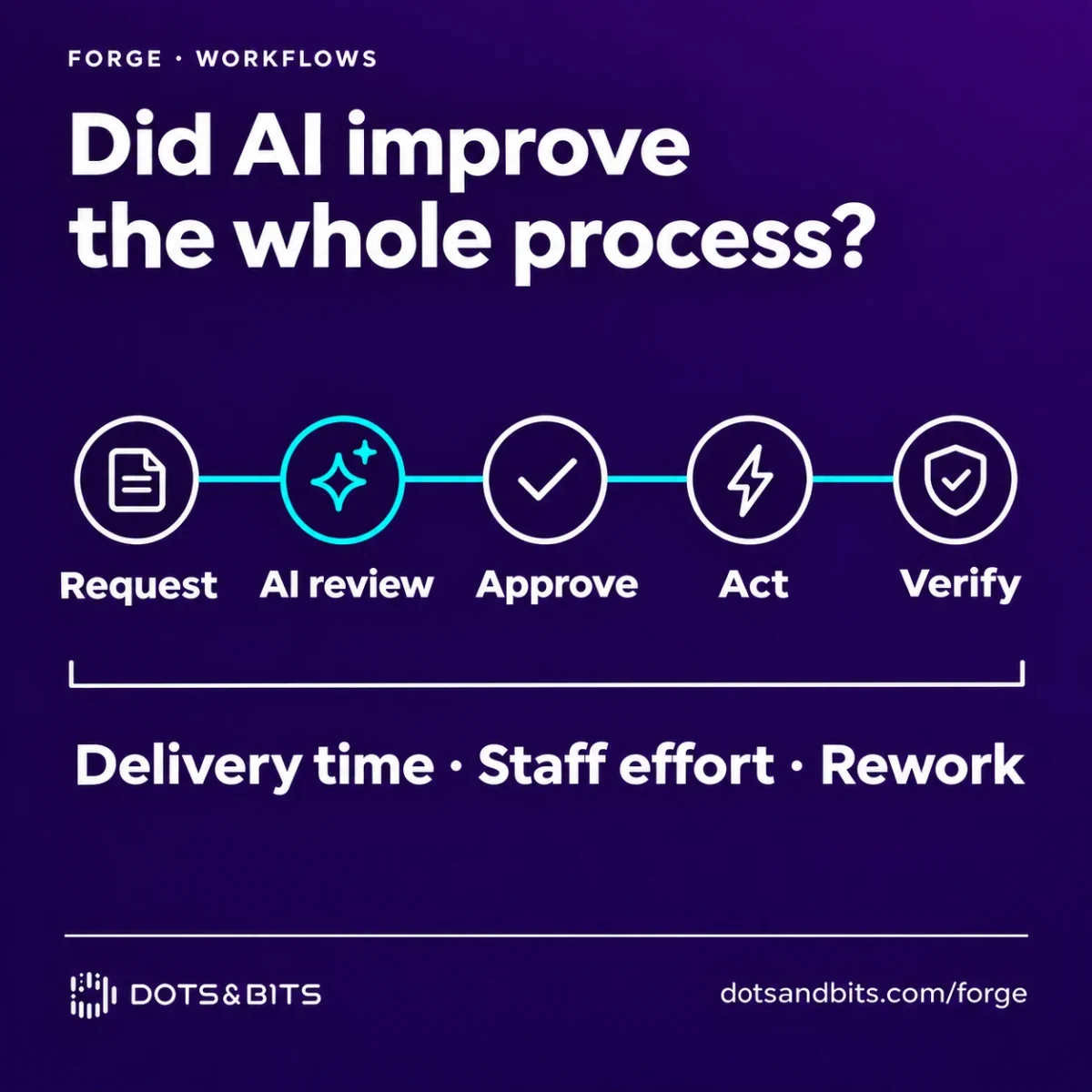
With Forge, we build one workflow across the people and systems involved. An agent investigates the request. The person responsible reviews its recommendation alongside the evidence and decides whether to proceed. If they approve the change, the workflow carries it out through your business systems and checks whether it had the intended effect. If it falls short, the team can see what happened and what still needs attention.
Measure what changed for the business
Before introducing AI, we agree with your team what counts as a finished case. We compare similar cases before and after the change. How long did people wait for a verified result? How much staff time did each case take? How often was the work done right the first time?
Meeting a delivery commitment
Suppose a supplier delay puts two Friday deliveries at risk. An agent finds stock at a second warehouse. The transfer needs approval for the additional freight cost before the 4 pm collection deadline. Forge connects that decision to the stock reservation, the transport booking and the delivery confirmations for both orders.
The agent might find the stock by noon. If approval comes through at five, the team has saved time on the search and still missed the collection. The timestamps show where the team saved time and where it lost the chance to act. The delivery confirmations tell you whether both customers actually received their orders on time.
Moving from acute care to rehabilitation
A patient is ready to move from hospital care to rehabilitation. The receiving team needs a current picture of the patient’s condition and care needs. The hospital discharge summary and current medication list are part of that handover. Depending on the case, the team may also need nursing or therapy notes, a report from surgery, or recent scans and their findings.
With Forge, an agent can check which documents on the rehabilitation unit’s checklist have arrived and flag any missing items to the hospital’s discharge coordinator. While the coordinator follows up with the right department, the rehabilitation team can confirm when it has a place for the patient.
The workflow records when the patient was ready, when the required documents arrived, when a place became available and when the receiving team confirmed the handover. Did finding a missing document earlier help the patient transfer sooner, or was the wait for a place the deciding factor?